Planning a Multi-Session Fishing Route
A route that spans several sessions gives your play a sense of journey and purpose. This guide shows you how to build one around a theme, with space left for surprises.
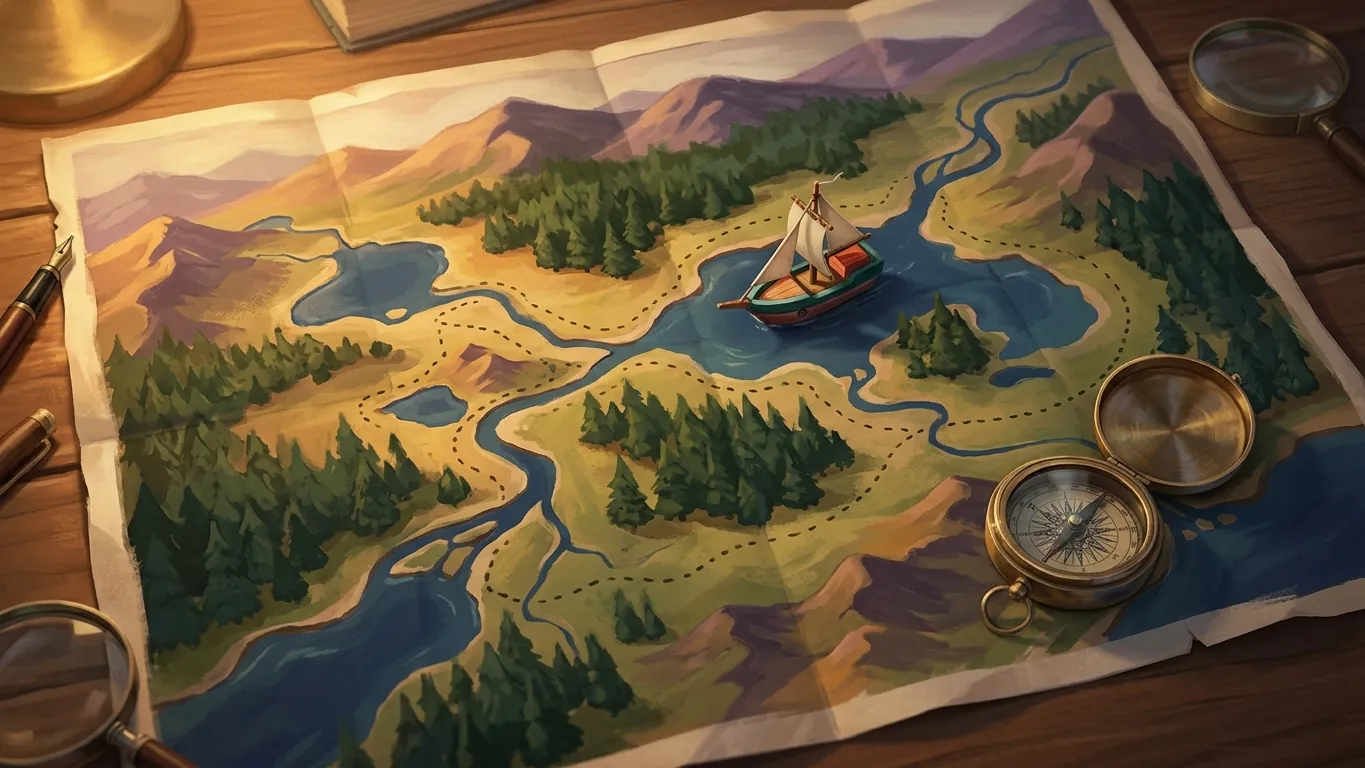
Think in Chapters
Most play sessions stand alone: you log in, fish somewhere and log out. A multi-session route changes that. Instead of a single outing, you plan a journey that unfolds over several evenings, with each session as a chapter. This gives you something to look forward to and helps you explore areas you might otherwise skip.
The idea is not to create a rigid itinerary. Think of it more like planning a road trip: you choose a direction and a few highlights, then let the details sort themselves out along the way.
Choosing a Theme
A theme gives your route a sense of identity. It can be geographical, such as following a single river from its source to where it widens into a lake. It can be about landscape, like visiting every high mountain pond you can find, or every sheltered forest creek. It can even be about time, such as fishing each spot only at sunrise.
Themes help you make decisions. When you are unsure where to go next, ask which place fits your journey best. They also make your memories more coherent, because each session feels connected to the last. If you keep a travel journal, a themed route gives it a natural storyline.
Building Your Route Step by Step
Here is a simple process you can adapt to any area of the game.
- 01
Study the map
Look at the area you want to explore and trace how lakes, rivers and streams connect.
- 02
Pick a theme
Choose a guiding idea, such as following one river or visiting high-altitude waters.
- 03
Select three to five stops
Mark a handful of places that fit your theme. Keep the list short so each stop gets enough time.
- 04
Assign one stop per session
Give each chapter of your journey a main destination, with travel between stops forming part of the experience.
- 05
Review after each session
Note what you enjoyed and adjust the next stop if something more interesting appeared on the way.
Packing the Right Gear for the Journey
A long route can take you through very different waters, from fast streams to wide, calm lakes. Before setting out on each chapter, think about what kinds of water you are likely to meet. Bringing a setup that can handle a few different situations means you can enjoy each stop without constantly heading back.
The game's own descriptions of rods, reels, lines and lures are the best guide to what each item is designed for, so take a few minutes to read them. If you are not sure what suits a particular place, experiment. Part of the fun of a route is learning how your choices work in different settings and refining them as you go.
Leaving Room for Detours
The best journeys rarely go exactly to plan. On the way to your next stop, you might spot a waterfall, a small pond behind a ridge or a bay that looks too inviting to pass. Let yourself follow those detours. A route is a framework, not a rule.
Some detours may even become the highlight of the whole trip. If that happens, consider adding them to your journey or planning a future route around them. This flexibility keeps your play feeling fresh and personal.
When your route is complete, take a moment to look back over the map and remember where you went. You will likely find that the game world feels much more familiar and much more personal than before. Then, when you are ready, pick a new theme and begin the next journey. If you plan a route you are proud of, feel free to share it with us through the contact form.
Related articles
 Your First Trip as a Traveling Angler
New to Call of the Wild: The Angler? Learn how to approach your first session as a relaxed journey, from basic rhythm to reading the map.
Read more
 How to Find Scenic Fishing Spots
Practical ideas for finding beautiful, peaceful fishing spots in Call of the Wild: The Angler, from following water downhill to climbing for views.
Read more
 Reading Lakes and Rivers Like a Traveler
Learn to read currents, bends, shorelines and drop-offs in Call of the Wild: The Angler and turn your observations into better fishing choices.
Read more